GPT-6 models designed protein shapes using only reasoning and code
Image: OpenAI · · 2 min read
An OpenAI preprint reports GPT-6 models designed proteins using reasoning and code alone, with lab tests showing binding to five targets.
On November 24, OpenAI published a preprint reporting that its GPT-6 model family can design protein shapes and the amino acid sequences that form them using only reasoning and code. The company says these designs do not require calling specialized biology models.
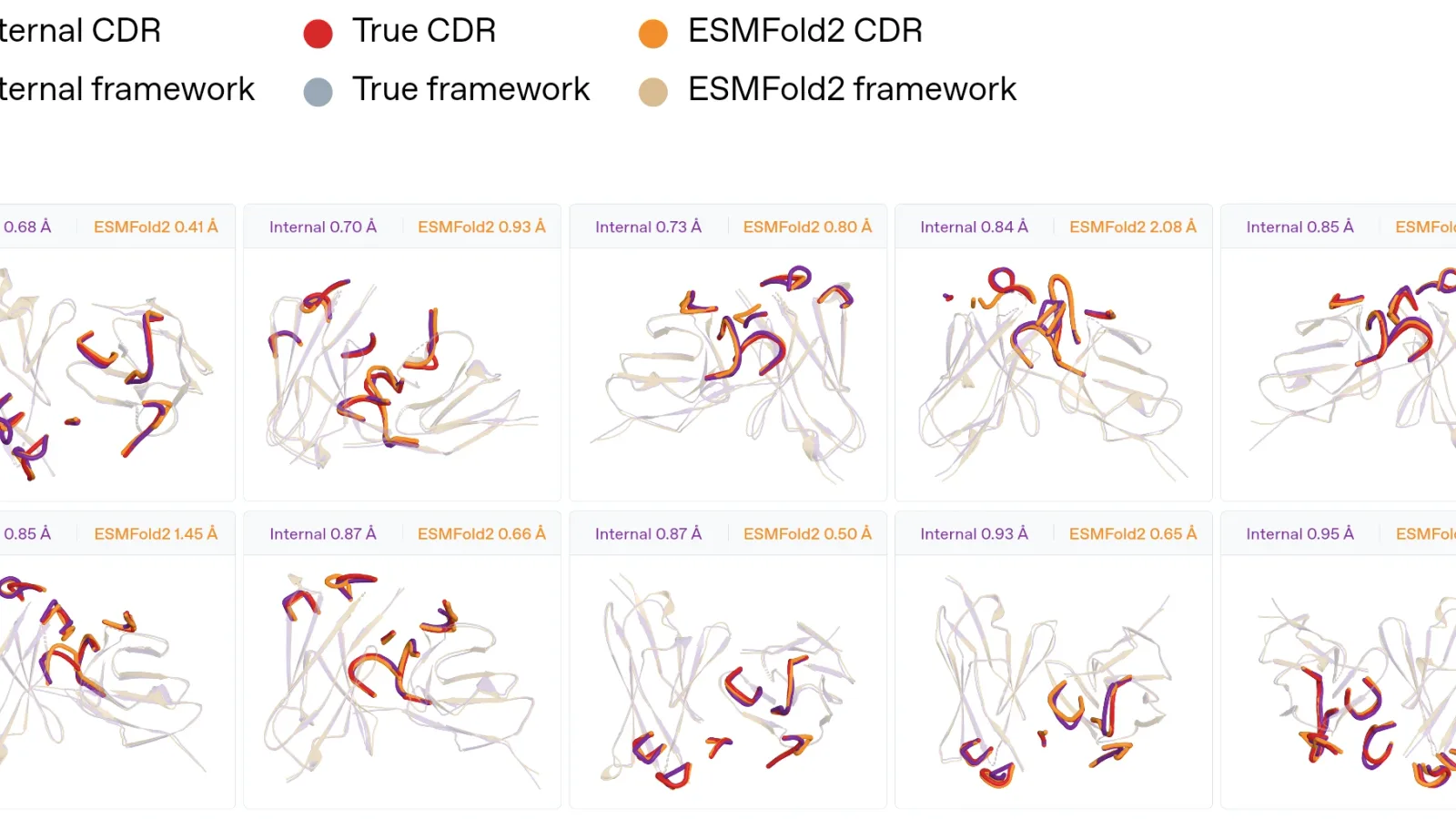
Proteins are built from chains of amino acids, and the order of those amino acids helps determine a protein's three-dimensional shape and what it does. Researchers often want small proteins, called minibinders, that attach to a specific target. Until now, this work usually relied on separate specialized models to generate shapes and sequences. According to OpenAI, GPT-6 models can produce such designs from a natural-language prompt that specifies where a protein should attach and what shape it should take.
In computational tests across 14 protein tasks, the company's newest models matched or beat specialized models on most of them. Predicting a complete protein structure remained a clear weakness. On MotifBench, a set of 30 challenges that asks a model to build a protein around a fixed arrangement of amino acids, 43.7% of designs from an internal research model passed the checks, compared with 27.8% for RFdiffusion, a specialized design model. These are preliminary computational results.
Laboratory tests
In experiments with research partner Onava, proteins based on GPT-6.2's designs showed signs of binding in at least one case for each of five targets. Of 322 minibinders tested, 35 (10.9%) bound their intended target: 5 for PD-L1, a protein some cancers use to evade the immune system; 3 for IL-7Rα; 1 for TrkA; 8 for VEGF-A; and 18 for IL-17A. Specialized models still supplied the amino acid sequences and helped select candidates. OpenAI notes that the original RFdiffusion study reported higher hit rates, but such rates depend on how strictly designs are filtered before testing and on how binding is defined.
In a second experiment, the model was given the three-dimensional structures of existing minibinders with their sequences withheld, and asked to propose new ones. The new sequences often differed greatly from the originals, with median differences of 50% for VEGF-A, 43% for MDM2 and 15% for PD-1. For unpublished shapes, 14 of 107 proteins (13.1%) showed binding. In antibody tests, 128 of 182 redesigned loop sequences for six small antibodies (VHHs, single-domain antibodies) showed signs of binding to IL-4Rα. Of 272 fragments based on five therapeutic antibodies, 179 (66%) still bound their original target, PD-1 or PD-L1. Because this is a preprint, the results have not yet undergone independent peer review.
What comes next
Laboratory experiments are still needed to show whether the designed proteins can perform their intended functions, such as speeding up a specific chemical reaction. OpenAI also says it hopes researchers will eventually guide protein structure design by describing the features they want in plain language, much as people now guide image generation.
- #openai
- #gpt 6
- #protein design
- #biology
This article was prepared with AI assistance and reviewed by an editor.
Comments (0)
- Be the first to comment.