China's XPENG unveils IRON humanoid robot with 76 degrees of freedom
Image: XPENG · · 2 min read
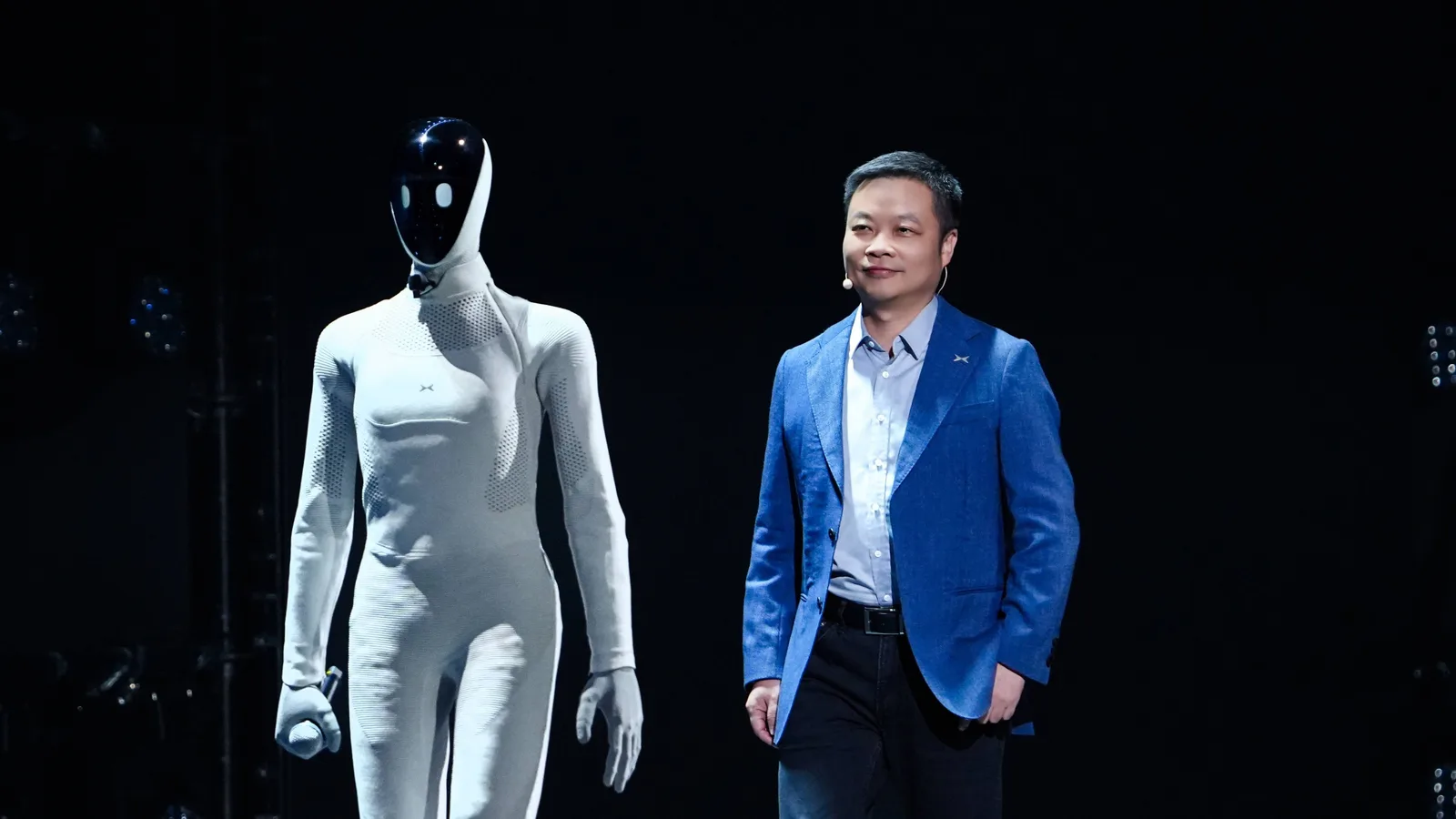
XPENG unveiled IRON, a humanoid robot with 76 degrees of freedom and over 1,500 touch sensors. Its official general launch is targeted for the second quarter of 2027.
China's electric carmaker XPENG unveiled IRON, a humanoid robot with 76 degrees of freedom and more than 1,500 touch sensors, at its AI Day event on November 26. The company says the robot is meant to move artificial intelligence out of the computer screen and into the physical world, a field known as physical AI.
Degrees of freedom refer to the number of independent directions a machine can move in. XPENG says IRON's flexibility is close to a human's, with some joints that can move in several directions at once, like a shoulder. More than 1,500 touch sensors cover over 80 percent of the robot's key body areas, so it can feel and grip an object as soon as it touches one.
Three Turing AI chips, developed in-house by XPENG, handle the robot's complex movements and decision-making. IRON can take on tasks through a voice command or a phone app, find its own way, head to a charging station when its battery runs low, and report when something goes wrong.
A three-layer "brain"
The architecture, which XPENG calls the Turing Physical AI Architecture, has three layers named System 0, System 1 and System 2. System 0 is the fastest layer, at the bottom. It manages hardware, energy and body control in a closed loop on a millisecond scale, working much like human reflexes. System 1 interprets what is happening around the robot and turns it into quick action. System 2, at the top, is the slow, deliberate layer where complex tasks are planned. XPENG says the system can learn from its own mistakes, and that the training speed of its AI model has risen 10 to 12 times compared with before.
The same AI foundation is being applied to the company's cars. A software update due for vehicles in December 2026 adds a system that senses road conditions when the driver lifts off the accelerator, then adjusts how sharply the car slows and how much energy it recovers. In tests in heavy city traffic, XPENG says usable range rose 12.4 percent compared with having energy recovery turned off entirely. The first commercial driverless taxi to use the same foundation, YOYO-01, is planned to hit the road in 2027. The company's electric flying car, which can carry people, has completed flight tests and is nearing the end of its certification process.
From factory to store
IRON is being trained at XPENG's "Robot Data Factory", a facility the company set up to draw on its car-making experience. There the robot is trained in more than 250 scenarios across 15 separate work areas. Robots coming off a dedicated automated production line then pass more than 600 AI-assisted holographic quality inspections and over 1,000 tests covering both the full robot and its key components.
XPENG says IRON will begin training in the first quarter of 2027 as a sales assistant in the company's own stores, with an official general launch scheduled for the second quarter.
- #xpeng
- #humanoid robot
- #physical ai
- #robotics
This article was prepared with AI assistance and reviewed by an editor.
Comments (0)
- Be the first to comment.